NHA Digital Academy Launched to Strengthen Healthcare Training and Digital Skills in India
Key Takeaways
- 1The National Health Authority (NHA) has launched the NHA Digital Academy, a new online learning platform designed to improve healthcare training, digital skills, and programme implementation capacity across India.
- 2The initiative aims to support professionals working in public health systems, healthcare administration, and digital health programmes by offering structured learning opportunities through a central digital […].
Listen to this Article
Narrated by system voice
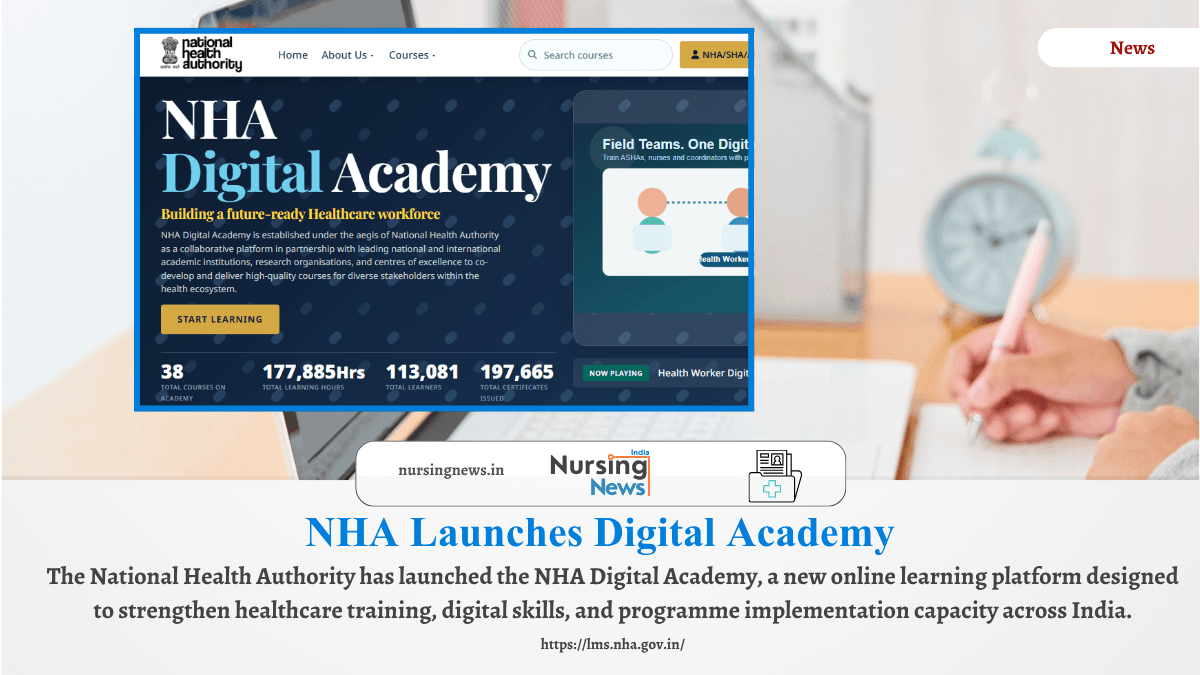
The National Health Authority (NHA) has launched the NHA Digital Academy, a new online learning platform designed to improve healthcare training, digital skills, and programme implementation capacity across India.
The initiative aims to support professionals working in public health systems, healthcare administration, and digital health programmes by offering structured learning opportunities through a central digital platform.
With healthcare systems increasingly relying on technology, data platforms, and coordinated service delivery, the need for continuous workforce training has grown significantly. The NHA Digital Academy has been introduced to address this demand through accessible and standardised learning programmes.
Key Highlights
- NHA launches Digital Academy for healthcare training
- Online courses for professionals and administrators
- Includes live sessions, workshops, and self-paced learning
- Supports national health and digital health programmes
- Tracks learner progress and completion digitally
The platform is expected to benefit a wide range of users, including healthcare professionals, programme managers, administrators, operational teams, and implementation staff involved in large-scale health initiatives.
A key feature of the academy is its web-based Learning Management System (LMS), where authorised users can access e-learning modules, join virtual classes, and participate in interactive workshops through a single portal.
The academy offers multiple learning formats to improve flexibility and participation. Self-paced courses allow users to learn according to their schedule, while live virtual classrooms enable direct interaction with trainers and peers. Workshop modules are expected to support collaboration, discussion, and practical problem-solving.
The platform also includes digital monitoring tools that can track enrolment, course completion, learner progress, and training outcomes. This can help institutions and programme leaders assess capacity-building efforts more effectively.
The Digital Academy has been developed through collaboration with academic institutions, research organisations, and expert centres. This approach is expected to improve the quality, relevance, and practical value of training content.
As India continues to expand major healthcare and digital health programmes, skilled human resources remain essential for effective implementation. The NHA Digital Academy is expected to play an important role in strengthening workforce readiness and long-term professional development across the healthcare sector.
About the author
Rajendra Sharma, RN, RM
Editorial contributor at Nursing News India.
View all articles by RajendraGet the brief that 12,000+ nurses read every Tuesday
Top stories. INC updates. CNE opportunities. 5-minute read.
Double opt-in via Brevo. Unsubscribe anytime.
Read our Editorial Policy · Corrections Policy · Fact-Checking Policy
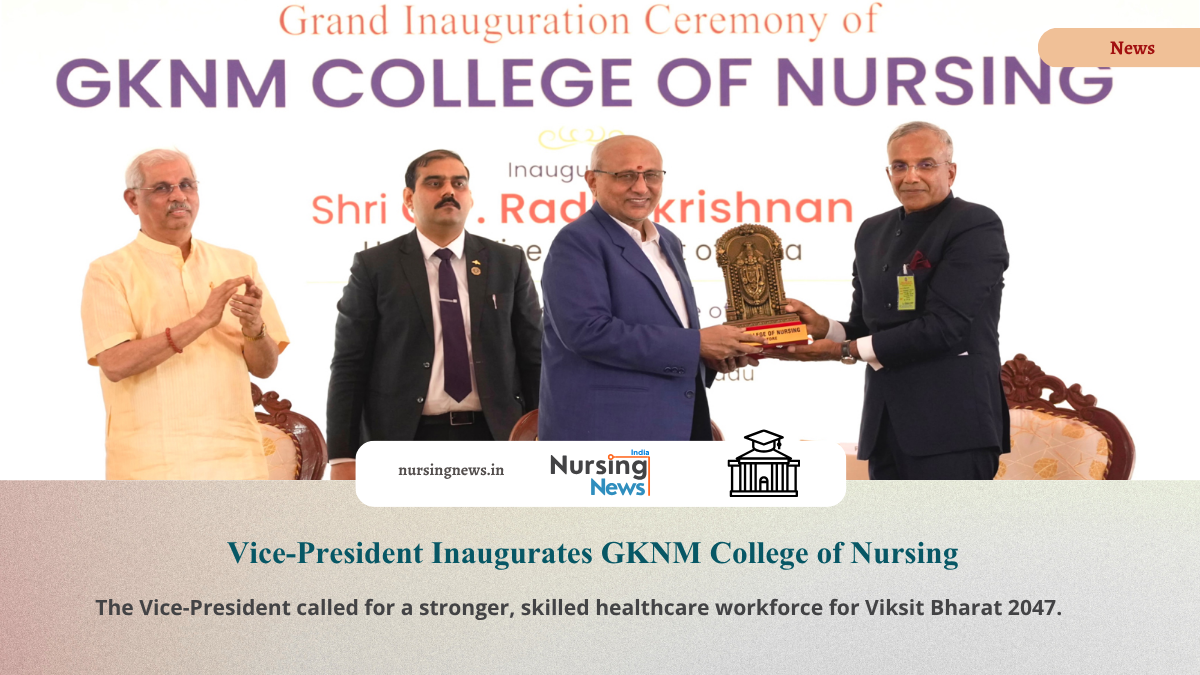
Vice-President opens GKNM College of Nursing, calls for a stronger health workforce
At the Coimbatore inauguration, C. P. Radhakrishnan called nurses central to healing and tied nursing education to India's Viksit Bharat 2047 goal.
2 min read