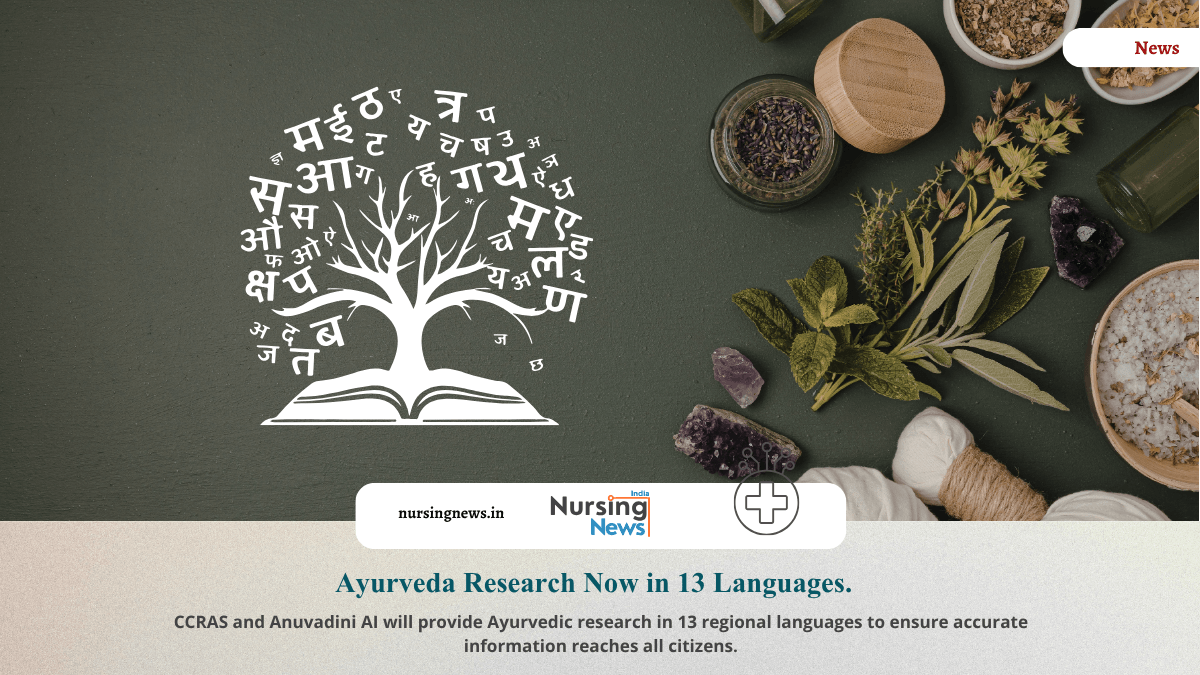
CCRAS Partners with Anuvadini AI to Translate Ayurveda Research into 13 Indian Languages
Key Takeaways
- 1In a major step toward improving accessibility of traditional medicine knowledge, the Central Council for Research in Ayurvedic Sciences (CCRAS) has partnered with Anuvadini AI to make Ayurvedic research available in 13 regional languages across India.
- 2The initiative aims to bridge the language gap in healthcare information by ensuring that authentic Ayurvedic knowledge reaches a […].
Listen to this Article
Narrated by system voice
In a major step toward improving accessibility of traditional medicine knowledge, the Central Council for Research in Ayurvedic Sciences (CCRAS) has partnered with Anuvadini AI to make Ayurvedic research available in 13 regional languages across India.
The initiative aims to bridge the language gap in healthcare information by ensuring that authentic Ayurvedic knowledge reaches a wider population, including non-English speaking communities.
According to officials, the collaboration will focus on translating validated research materials, clinical findings, and scientific publications related to Ayurveda into multiple Indian languages, making them more accessible for practitioners, students, and the general public.
Key Highlights
- Ayurveda research to be translated into 13 Indian languages
- Collaboration between CCRAS and Anuvadini AI
- Focus on accessibility and inclusivity in healthcare knowledge
- Aims to reach rural and non-English speaking populations
The move is aligned with the Government of India’s broader vision to promote traditional systems of medicine under the Ministry of AYUSH, while also leveraging digital technologies to expand their reach.
Experts believe that language has long been a barrier in disseminating scientific healthcare knowledge in India. By translating research into regional languages, the initiative is expected to improve awareness, education, and adoption of Ayurveda-based practices at the grassroots level.
The use of AI-powered translation through Anuvadini is expected to ensure both scalability and consistency, while maintaining the accuracy of technical and medical terminology. This is particularly important in healthcare communication, where precision plays a critical role.
The initiative is also likely to benefit nursing and allied healthcare professionals, especially those working in community and primary healthcare settings, by providing them with easier access to evidence-based Ayurvedic knowledge in their preferred language.
In addition to supporting practitioners, the translated materials will help empower patients and the general public with reliable information, reducing dependence on unverified sources.
This collaboration marks a significant step in integrating technology with traditional medicine systems, while promoting linguistic inclusivity in healthcare education and research dissemination across India.
Get the brief that 12,000+ nurses read every Tuesday
Top stories. INC updates. CNE opportunities. 5-minute read.
Double opt-in via Brevo. Unsubscribe anytime.
Read our Editorial Policy · Corrections Policy · Fact-Checking Policy

What Aarogya Setu 2.0, LOINC and the Bharat Health Terminology Service Mean for Nurses at the Bedside
The headlines are about apps and standards. The day-to-day change is about how you chart, hand over and follow a patient across facilities.
6 min read