
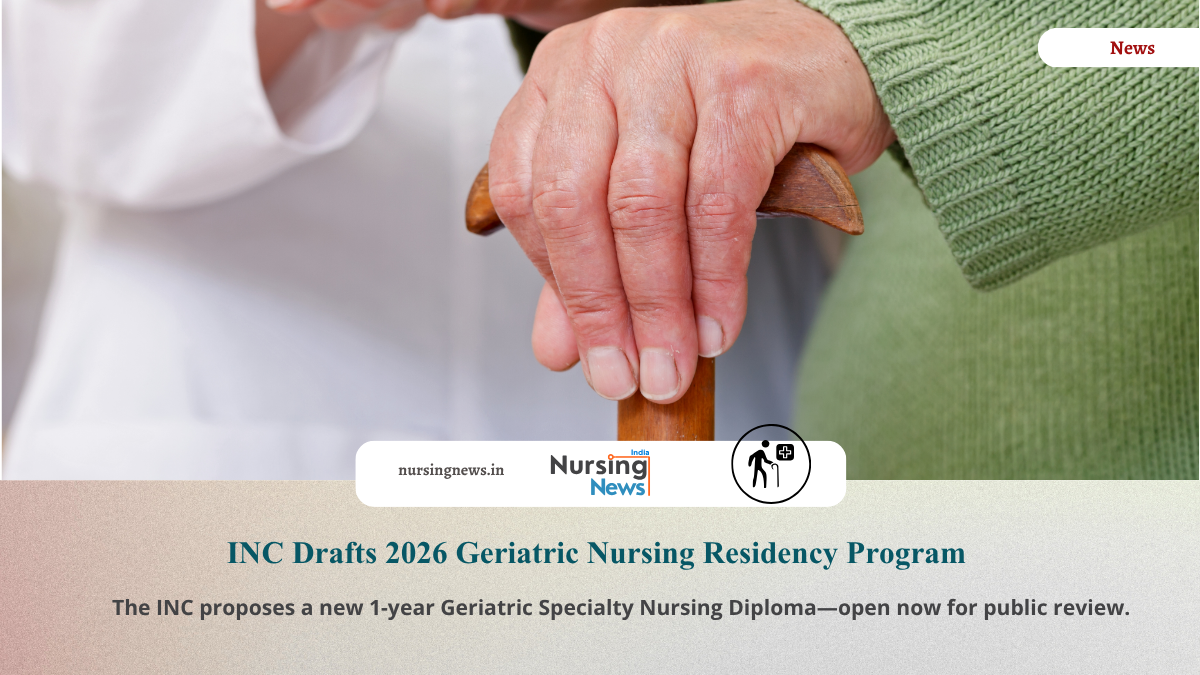
NEW DELHI, INDIA — In a major step toward addressing the healthcare needs of India’s rapidly aging demographic, the Indian Nursing Council (INC), headquartered in New Delhi , has released a pivotal draft notification. The document outlines the proposed Indian Nursing Council (Post Basic Diploma in Geriatric Specialty Nursing – Residency Program) Regulations, 2026.
Currently open for public review , this initiative aims to create a dedicated cadre of specialized nurses equipped to handle the complex, holistic needs of older adults across Indian hospitals, long-term care facilities, and community settings.
The Demographic Shift: Why India Needs Geriatric Specialist Nurses
Population aging is a worldwide phenomenon, but India’s elderly population is growing at an unprecedented rate. In 2022, India was home to approximately 149 million citizens aged 60 and above, making up 10.5% of the total population. By 2025, this number is projected to more than double, reaching an estimated 349 million people, or 20.8% of the country’s population. India currently holds the second-largest aged population globally.
This demographic shift brings a massive increase in chronic and critical illnesses, demanding promotive, preventive, curative, rehabilitative, and home-based care. The National Health Policy (2017) and the National Program for Health Care of the Older Adults (2014) have both strongly emphasized the need for specialized geriatric healthcare. The INC’s new residency program is a direct response to this need, aiming to reduce the burden on tertiary care by focusing on specialized, community-based interventions.
Program Overview: Post Basic Diploma in Geriatric Specialty Nursing
The Post Basic Diploma is designed as an intensive one-year residency program. The curriculum is highly experiential, moving away from traditional classroom-heavy models to focus strictly on competency-based clinical training.
| Program Component | Percentage of Curriculum | Total Hours |
| Theory | 10% | 200 Hours |
| Practicum (Skill Lab) | Part of 90% | 40 Hours |
| Practicum (Clinical) | Part of 90% | 1730 Hours |
| Total Program Time | 100% | 1970 Hours |
During the 42-week residency posting, students will work 45 hours per week, following the same duty schedule as staff nurses with varying shifts.
Comprehensive Curriculum Breakdown
The syllabus is strategically divided into foundational courses and major specialty clinical courses:
1. Foundations to Geriatric Specialty Nursing Practice
- Professionalism & Leadership: Ethical decision-making, clinical leadership, resource management, and understanding medico-legal issues like the Consumer Protection Act and advance directives.
- Communication & Counseling: Crisis communication, breaking bad news, and educating patients and caregivers.
- Evidence-Based Practice: Introduction to nursing research, basic statistical tests, and clinical application of research in geriatric care.
2. Geriatric Specialty Nursing I (Context & Basic Sciences)
- Applied Sciences: Reviewing age-related structural and functional changes in anatomy, physiology, and pathophysiology across all major body systems.
- Pharmacology: Understanding the pharmacodynamics and pharmacokinetics of drugs common in elderly care (e.g., analgesics, antihypertensives, bronchodilators).
- End-of-Life Care: Principles of a “good death,” grief counseling, and managing symptoms in the last 48 hours of life.
3. Geriatric Specialty Nursing II (Nursing Management)
- System-Specific Management: Assessing and managing disorders of the cardiovascular, endocrine, respiratory, neurological, and musculoskeletal systems.
- Geriatric Syndromes: Managing specific elderly risks such as falls, frailty, delirium, dementia, and sleep problems.
- Mental Health & Abuse: Identifying elder abuse and violence, managing depression, suicidal risks, and cognitive impairment.
- Rehabilitation & Age-Friendly Environments: Integrating assistive devices, physiotherapy, and making home/institutional modifications for safety.
Eligibility and Admission Criteria
To ensure high standards, the INC has set strict entry requirements for nurses wishing to enroll across any State Nurse and Midwives Registration Council (SNRC) in India:
- Qualification: Must be a Registered Nurse and Registered Midwife (RN & RM) holding a recognized B.Sc. Nursing or GNM diploma.
- Registration: Must possess a Nurses Unique Identification Number (NUID) registered in the Nurses Registration & Tracking System (NRTS).
- Experience: A minimum of one year of clinical experience as a staff nurse prior to enrollment is required. Preference is given to those with experience in Geriatric, Medical-Surgical, Community Health, or Psychiatric Nursing.
- Selection Process: Admissions are strictly merit-based, determined through a competitive entrance examination and interview conducted by the competent authority.
Institutional Guidelines: Where Will the Program Be Hosted?
The INC ensures that only well-equipped institutions can offer this program. Eligible facilities include:
- Nursing colleges attached to a parent specialty/tertiary hospital with a minimum of 200 beds.
- The hospital must have a dedicated 30-bed geriatric ward and functioning geriatric Outpatient Departments (OPDs).
- Hospitals offering DNB/Fellowship programs in Geriatric, Family, or General Medicine are also eligible.
- Institutions must maintain a full-time nursing teaching faculty ratio of 1:10, and a strict student-to-patient ratio of 1:3.
Call for Public Feedback
The Indian Nursing Council is currently seeking input from healthcare stakeholders and the general public across India regarding these draft regulations.
Comments, suggestions, and feedback can be submitted directly to the INC via email at secy.inc[At]gov.in within 30 days of the May 27, 2026, notification date.