
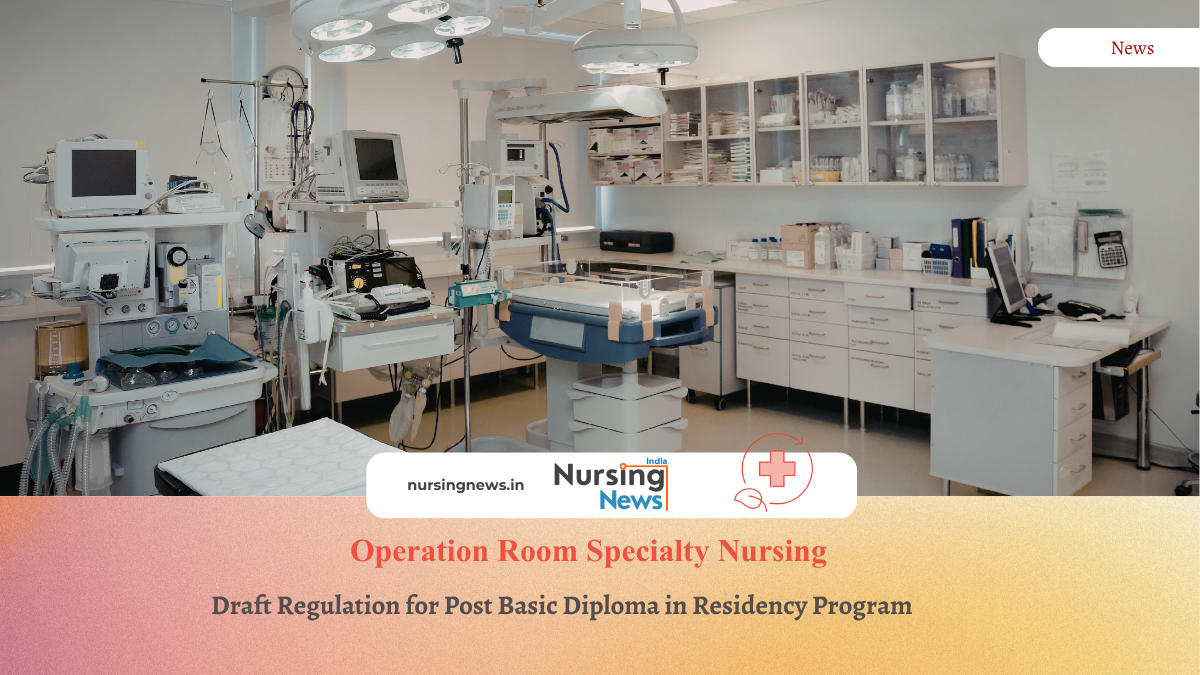
The Indian Nursing Council has released a draft notification for the Post Basic Diploma in Operation Room Specialty Nursing – Residency Program (2026), inviting feedback from stakeholders for a period of 15 days before finalisation.
The draft regulation outlines a one-year residency-based diploma program aimed at strengthening competency-based training for nurses working in operation room settings. The council has opened the proposal for public consultation, allowing nursing professionals, institutions, and other stakeholders to submit suggestions.
Key Highlights
- One-year Post Basic Diploma (Residency Program)
- Focus on Operation Room Specialty Nursing
- Competency-based training approach
- Draft open for public comments for 15 days
- To be implemented after final notification
According to the draft, the program is structured with a strong emphasis on practical and clinical training, where nearly 90% of the course consists of skill lab and clinical exposure, while only about 10% is theory-based.
The training is designed to prepare nurses to handle intraoperative care, ensuring patient safety, efficiency in surgical procedures, and coordination within the surgical team. The council notes that with the increasing complexity of surgeries and use of advanced technologies, the demand for skilled operation room nurses has grown significantly.
Course Structure & Training
The proposed curriculum includes extensive clinical exposure across multiple specialties such as general surgery, orthopaedics, obstetrics and gynaecology, cardiothoracic surgery, neurosurgery, and emergency care.
Students will undergo over 1700 hours of clinical training, making it a highly practice-oriented program focused on real-time patient care and surgical assistance.
A structured competency framework has also been introduced, where students must demonstrate skill proficiency across three levels. Certification will only be granted once candidates achieve the highest level of competency, ensuring they can perform procedures independently.
Eligibility & Institutional Requirements
As per the draft guidelines, candidates must be registered nurses (RN & RM) with at least one year of clinical experience, preferably in operation room settings. Selection will be based on entrance examination and interview.
The program can be offered by nursing colleges attached to hospitals with a minimum of 200 beds or by hospitals with advanced surgical facilities, ensuring adequate infrastructure for training.
Assessment & Certification
The evaluation system will include written examinations, practical assessments, and Objective Structured Clinical Examinations (OSCE). Candidates must secure a minimum of 60% marks in both theory and practical components to pass.
The program also mandates completion of clinical logbooks, procedural competencies, and hands-on assessments conducted in real clinical settings.
Focus on Patient Safety and Quality Care
The curriculum places significant emphasis on infection control, surgical safety protocols, emergency management, and biomedical waste handling. Nurses will be trained to manage critical situations in operation rooms, including complications, shock, and emergency responses.
The draft notification is currently open for feedback, and the council is expected to review suggestions before issuing the final regulations. The move is seen as a major step toward developing a specialized nursing workforce and improving surgical care standards across India.