
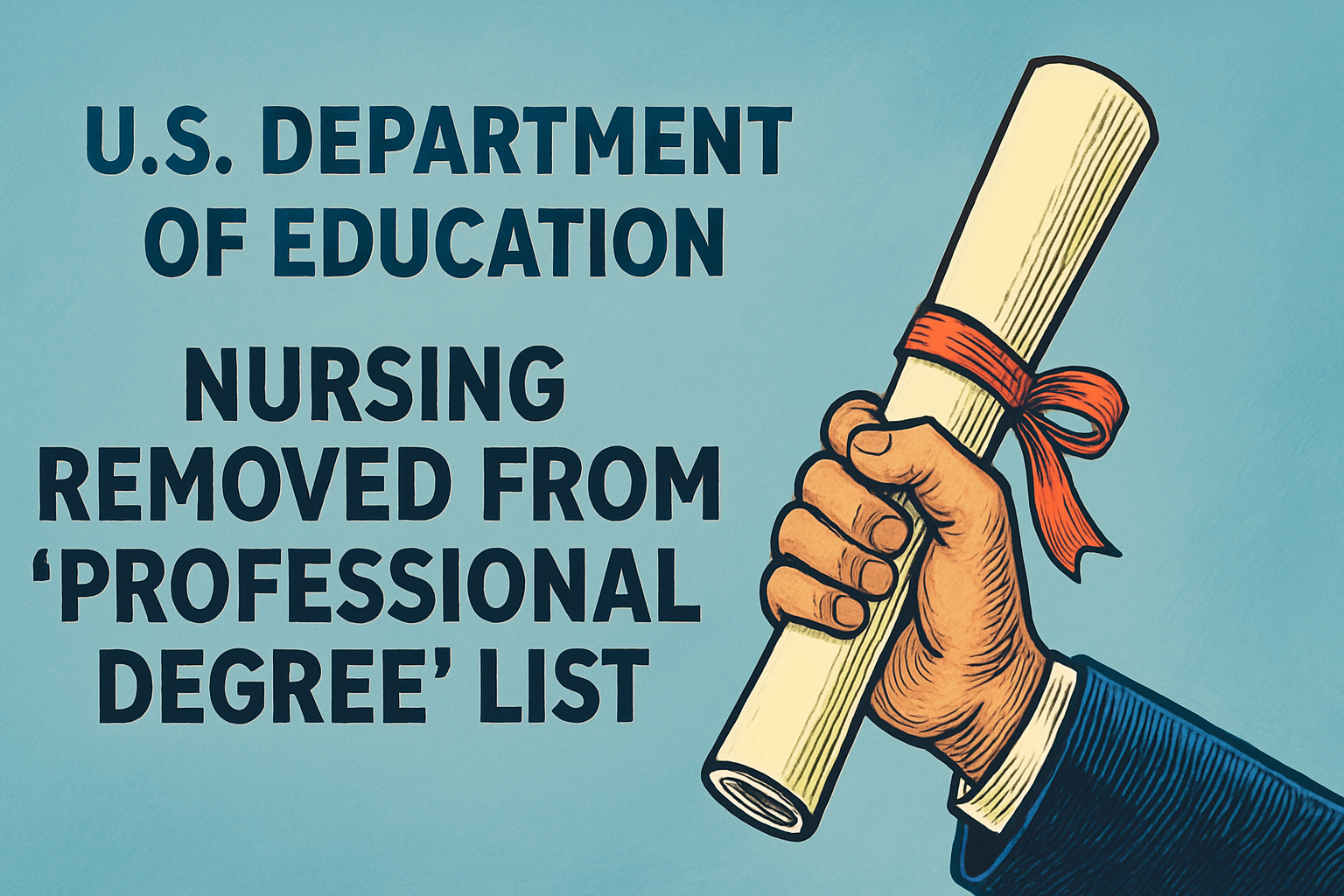
The United States Department of Education has announced a major revision to the definition of “professional degree” programs for federal student-loan purposes. Under the new regulations, Nursing and several other established fields will no longer be classified as “professional degrees”. The change is part of a broader restructuring of the U.S. federal financial-aid system and will take effect from July 2026.
Professional Programs That Remain on the List
Only a limited group of programs will continue to qualify for the highest federal loan limits under the “professional degree” category. These include:
- Medicine (MD)
- Osteopathic Medicine (DO)
- Dentistry (DDS/DMD)
- Pharmacy (PharmD)
- Veterinary Medicine (DVM)
- Optometry (OD)
- Podiatry (DPM)
- Chiropractic (DC)
- Law (JD)
- Theology/Divinity (MDiv or equivalent)
- Clinical Psychology (PsyD)
These programs are considered to require extensive advanced training and remain eligible for higher borrowing thresholds under federal aid.
Programs Removed From the Professional-Degree Category
A wide range of fields—many traditionally viewed as professional disciplines—have been excluded from the updated definition. These include:
- Nursing (all graduate-level tracks such as MSN, NP, DNP and doctoral programs)
- Physical Therapy
- Occupational Therapy
- Public Health (MPH, DrPH)
- Social Work
- Education and Teacher-Preparation Programs
- Speech and Language Pathology
- Allied Health and Rehabilitation Sciences
- Architecture, Accounting, and various other non-listed programs
These programs will still be fully recognized academically and professionally, but for federal loan purposes they will now be treated as standard “graduate programs” rather than “professional programs.”
Impact Within the United States
The change has prompted strong responses from nursing organizations, universities and healthcare workforce experts. Critics argue that lowering federal loan limits for graduate nursing education could reduce the number of advanced practice nurses, educators and specialists entering the U.S. healthcare system.
Many warn that the decision comes at a time when the U.S. continues to face significant nursing shortages, especially in rural and underserved regions. Advocates argue that graduate nursing programs require extensive clinical preparation and should continue to be treated at the same level as other health professions.
The Department of Education has clarified that the change is strictly related to loan classifications and does not downgrade the professional standing of nursing or any affected field. The policy does not alter licensure, clinical requirements, or recognition of these careers in the healthcare sector.
Smaller Global Implications
Because the United States is a major destination for international students and healthcare workers, the shift may influence education decisions abroad. Students planning to pursue advanced degrees such as Nurse Practitioner, DNP or public-health masters’ programs in the U.S. may face higher financial burdens due to lower federal loan eligibility.
Brief Note for Indian Nurses and Students
India is one of the largest sources of internationally trained nurses in the United States.
However, the new U.S. classification:
- does not affect NCLEX exam eligibility
- does not affect U.S. immigration pathways such as EB-3 for nurses
- does not change hiring or recruitment of foreign-educated nurses
- primarily affects those planning to pursue graduate-level nursing education within the United States and rely on U.S. federal student loans
For most Indian nurses who migrate through employment-based routes, the change does not alter licensure or job processes.
The United States’ new definition of professional degrees marks a significant change in how advanced education programs are categorized for federal financing. While the clinical and professional status of nursing and other affected fields remains fully intact, the financial-aid implications may reshape enrollment trends, influence higher education choices, and prompt continued debate about the value placed on essential health and social-service professions.